Table of Contents
As we move deeper into the decade, the bathroom is no longer just a functional space—it’s becoming a hub of wellness, sustainability, and intelligent design. Nowhere is this transformation more evident than in the rapid evolution of smart toilets. By 2026, these high-tech fixtures have moved beyond luxury status to become mainstream solutions for health-conscious, eco-aware, and design-savvy consumers worldwide.
Why Smart Toilets Are Gaining Global Momentum
The smart toilet market is projected to grow at a CAGR of over 8% through 2030, driven by rising urbanization, aging populations, and heightened hygiene awareness post-pandemic. In 2026, innovations are not just about comfort—they’re about intelligent sanitation, resource efficiency, and personalized user experiences.
Manufacturers like OTOL Group are leading this shift by integrating cutting-edge technology with sleek, modern aesthetics—offering products that meet international standards while remaining accessible to a broad consumer base.
Top Smart Toilet Trends Defining 2026
1. AI-Powered Hygiene & Health Monitoring
Gone are the days when smart toilets only offered heated seats and bidet functions. In 2026, advanced models now feature AI-driven health diagnostics. Using non-invasive sensors, these toilets can analyze urine and stool samples to monitor hydration levels, detect early signs of urinary tract infections, or even track glucose markers—providing users with real-time wellness insights via smartphone apps.
This trend is particularly resonant in markets like Japan, South Korea, and increasingly in North America and Europe, where preventive healthcare is gaining traction.
2. Water-Saving & Eco-Friendly Engineering
With global water scarcity concerns mounting, smart toilets in 2026 prioritize sustainability. Dual-flush systems are now standard, but newer models go further—featuring ultra-low consumption flushes (as low as 3 liters per cycle), self-cleaning nozzles that reduce chemical use, and greywater recycling compatibility.
OTOL Group’s latest smart toilets, for example, combine ceramic engineering with precision valve control to deliver powerful flushes using minimal water—aligning with certifications like WaterSense and ISO 14001.
3. Seamless Smart Home Integration
Smart toilets are no longer standalone devices. In 2026, they’re fully integrated into broader smart home ecosystems. Voice control via Alexa or Google Assistant, automatic lid opening via motion sensors, and usage analytics synced with home energy dashboards are now common features.
This connectivity enhances convenience while allowing homeowners to optimize resource use across their entire residence.
4. Minimalist, Universal Design Aesthetics
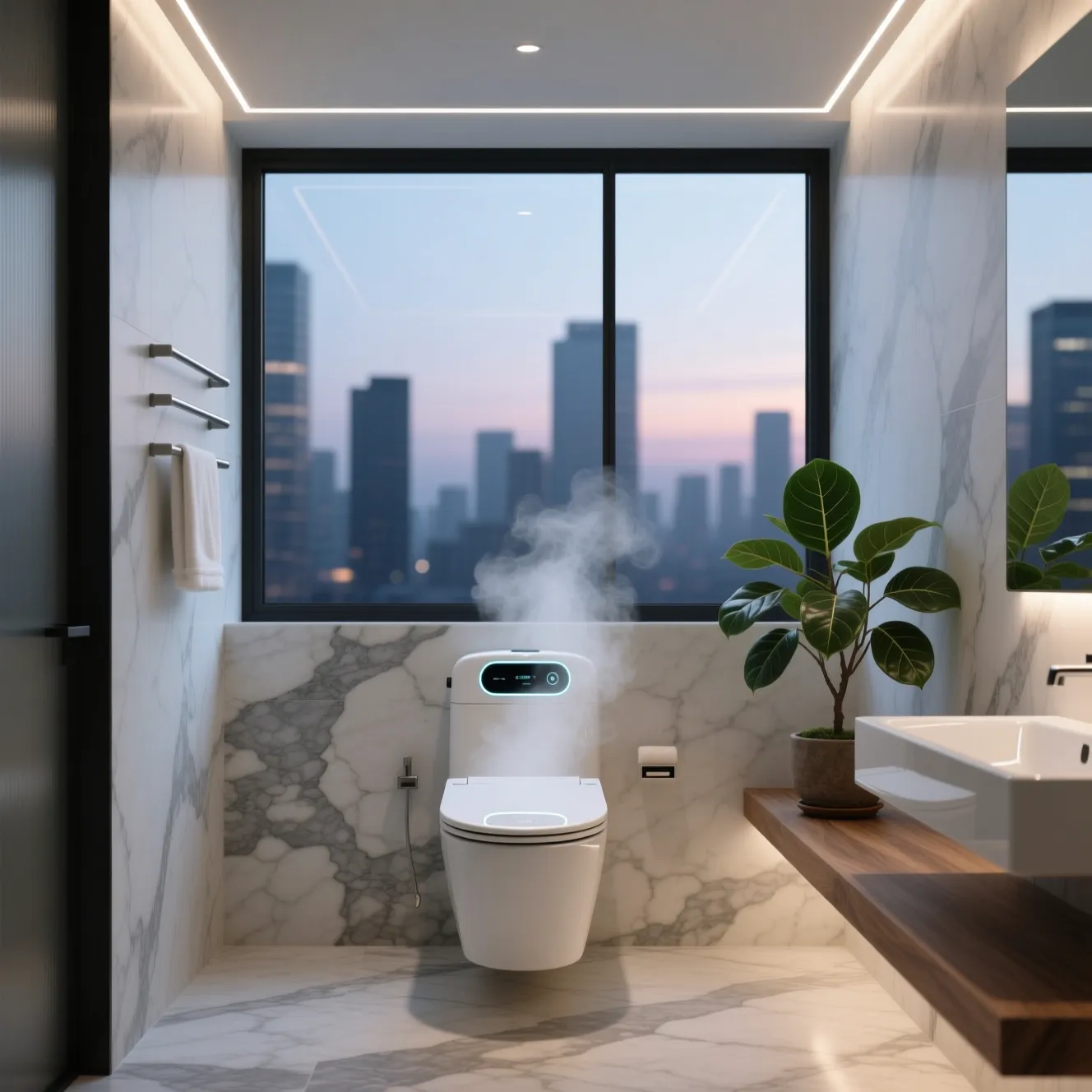
Design has shifted toward clean lines, wall-mounted installations, and hidden cisterns—creating a spa-like ambiance. The “invisible tech” philosophy dominates: controls are touchless or embedded in sleek side panels, and components like bidet wands retract completely when not in use.
This aesthetic appeals to both residential renovators and commercial developers seeking modern, hygienic public restrooms in hotels, offices, and airports.
5. Customization & OEM Flexibility for Global Markets
As demand diversifies across regions, manufacturers are offering greater customization. Voltage compatibility (110V vs. 220V), language-specific interfaces, region-specific plumbing standards, and modular add-ons (like UV sterilization or aromatherapy) allow brands to tailor products without compromising quality.
Companies like OTOL Group leverage 25+ years of export experience to deliver OEM/ODM smart toilet solutions that meet local regulations while maintaining global design coherence.
Challenges & Considerations in 2026
Despite rapid adoption, challenges remain. High upfront costs, complex installation requirements, and concerns about data privacy (especially with health-monitoring features) are barriers in some markets. However, as production scales and technology matures, prices are expected to drop—making smart toilets more accessible to middle-income households.
Moreover, industry leaders are addressing privacy through on-device data processing (without cloud storage) and clear user consent protocols.
Conclusion
The smart toilet trend in 2026 reflects a broader shift toward intelligent, sustainable, and human-centered living spaces. No longer a novelty, these fixtures represent the convergence of health tech, environmental responsibility, and modern design. For homeowners, builders, and distributors alike, understanding these trends is key to staying ahead in a rapidly evolving market.
As a trusted manufacturer with deep expertise in sanitary ware innovation, OTOL Group continues to pioneer smart toilet solutions that balance performance, elegance, and global adaptability—helping partners worldwide embrace the future of the bathroom, one intelligent flush at a time.